How To Fix a Sloped Backyard

What Goes Into a Yard Drainage Quote in Charlotte?
October 19, 2026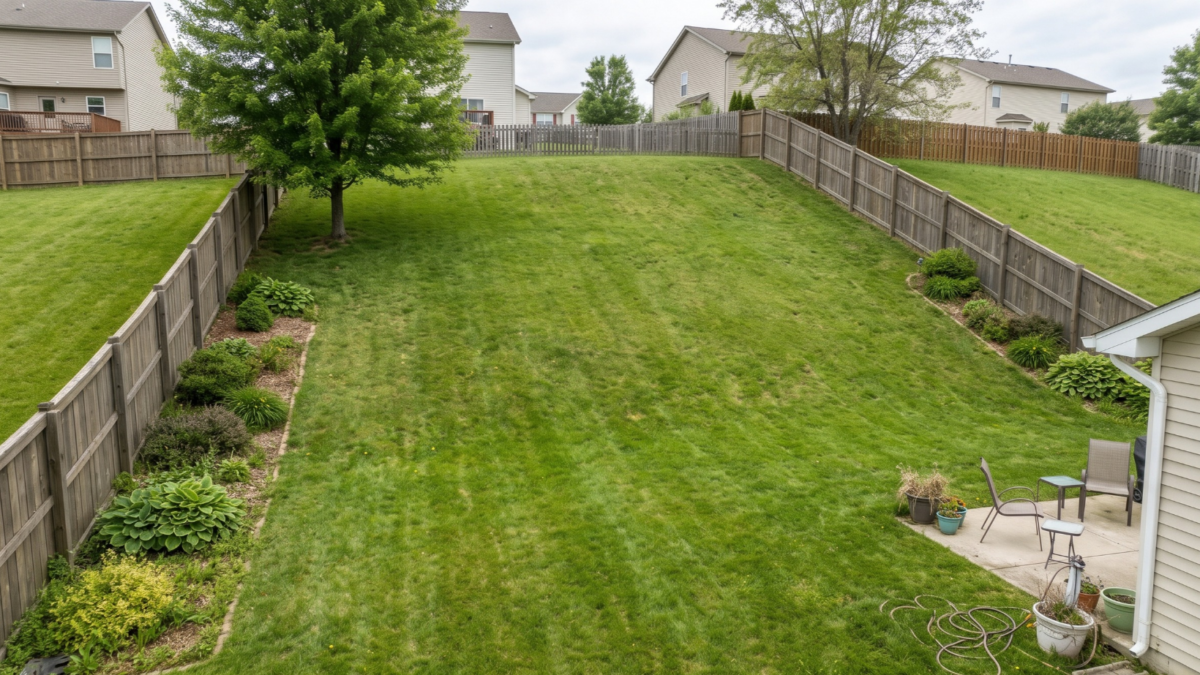
What Can You Do With a Sloped Backyard in Charlotte?
A sloped backyard can make even a beautiful property difficult to use. Maybe the lawn drops sharply away from the house, there’s no comfortable place for patio furniture, or reaching the lower part of the yard means walking down an awkward incline. Rainwater may also leave washed-out areas, exposed soil, or muddy spots at the bottom of the slope.
Fortunately, improving a sloped backyard doesn’t always mean flattening the entire property or building a large retaining wall.
Depending on the property’s layout and your goals, the solution may involve professional yard grading, a retaining wall, drainage improvements, new planting areas, or a combination of landscaping features.
The best place to start is with a simple question: What do you want to do with your backyard that you can’t comfortably do today?
Start With How You Want to Use the Space
Before choosing materials or asking about retaining wall prices, think about what you want your finished backyard to accomplish.
Common goals for sloped Charlotte properties include:
- Creating a more usable lawn: Making a portion of the yard more comfortable for outdoor activities, children, pets, or everyday use.
- Adding a patio or seating area: Creating suitable space for outdoor furniture, entertaining, or dining.
- Improving access: Making it easier to move between the house, patio, garden, and lower portions of the property.
- Building planting areas: Using landscape beds, shrubs, groundcovers, or terraced areas to complement the existing slope.
- Addressing erosion or runoff: Evaluating areas where rainwater carries soil downhill, creates channels, or collects at the bottom.
These goals can lead to very different projects. A homeowner who wants a small seating area may need a different approach from someone hoping to create a larger, more usable lawn.
Understanding the intended use helps determine whether grading alone, a retaining wall, or a combination of improvements is worth exploring.
Option 1: Use Yard Grading to Reshape the Slope
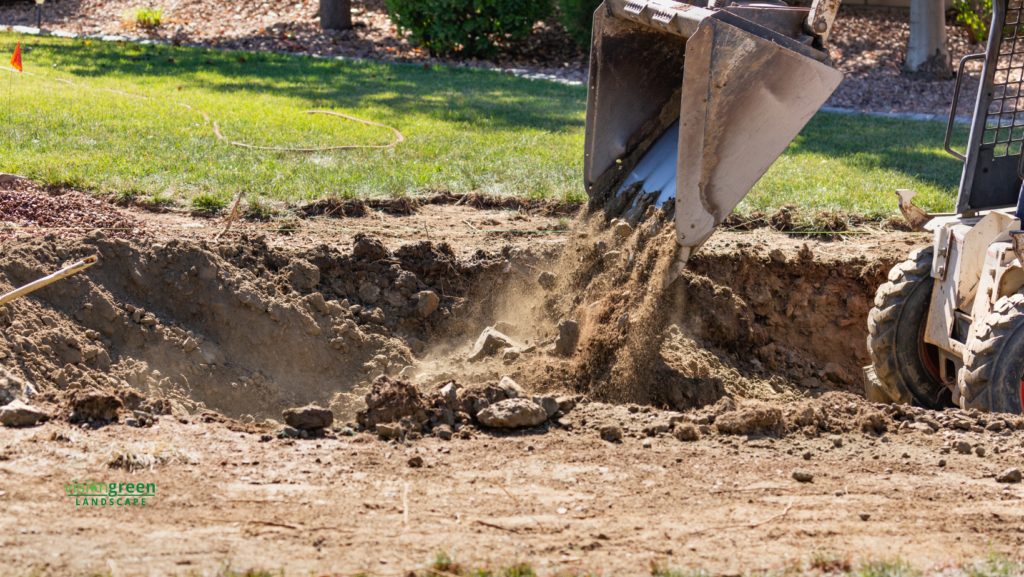
Yard grading changes the contours and elevations of the ground. Depending on the site, this may involve moving soil, correcting uneven areas, adjusting slopes, or preparing a section of the yard for future landscaping.
For some Charlotte homeowners, grading can make an awkward backyard more functional without requiring a retaining wall.
When Might Grading Be the Right Approach?
Grading may be worth considering when:
- A portion of the lawn has an uneven or uncomfortable slope.
- The property has enough available space to transition gradually between elevations.
- Low areas or surface contours interfere with the intended landscape design.
- The homeowner wants to prepare an area for sod, planting beds, or another outdoor improvement.
- Surface runoff needs to be evaluated as part of the overall landscape plan.
However, grading does not necessarily mean making the entire backyard flat. A functional landscape still needs appropriate elevations and consideration of where water will flow.
What Are the Limitations of Grading?
Some properties do not have enough space to gradually reshape a substantial elevation change. Existing fences, trees, patios, property boundaries, and nearby structures may also limit how the ground can be modified.
Excavation and additional fill can introduce their own design and drainage considerations. Moving soil without evaluating those conditions may simply shift a problem elsewhere.
Vision Green Landscape provides grading and yard leveling services in Charlotte for homeowners planning landscape improvements, addressing uneven ground, or evaluating slope-related problems.
Option 2: Build a Retaining Wall to Create More Usable Space
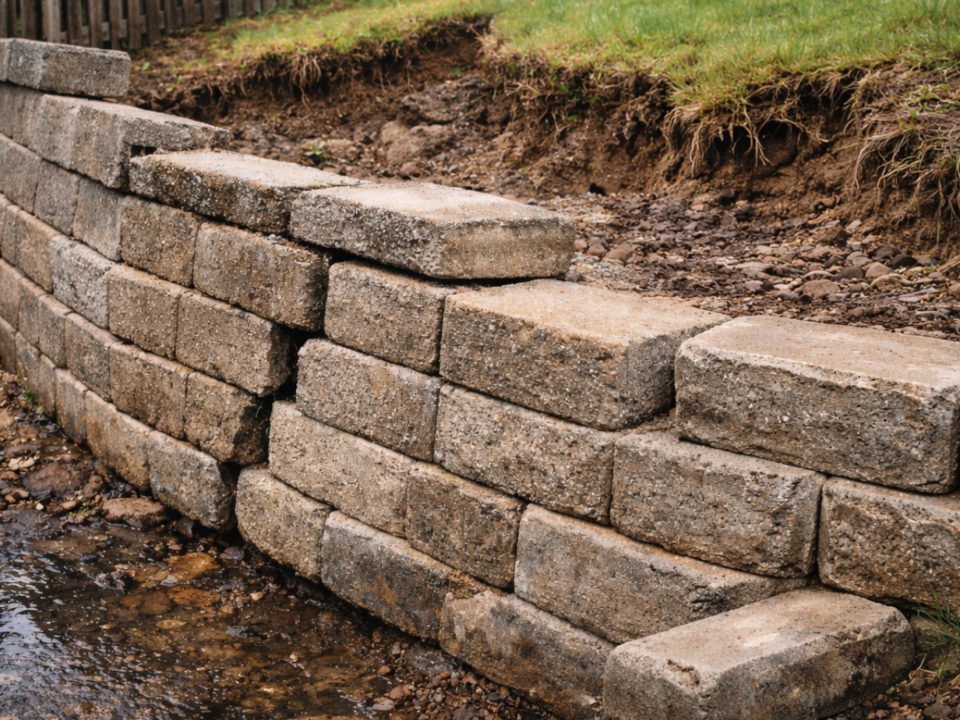
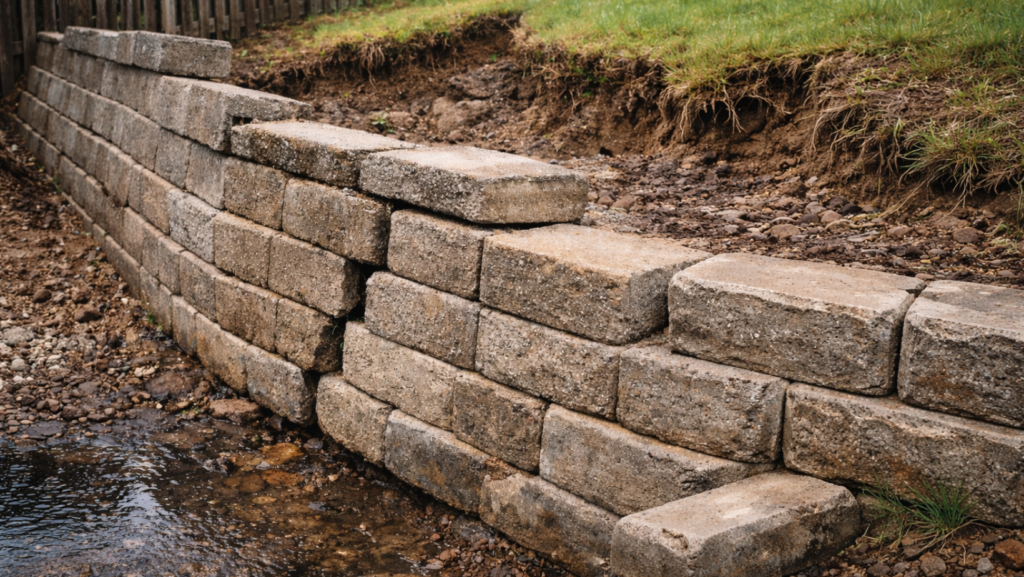
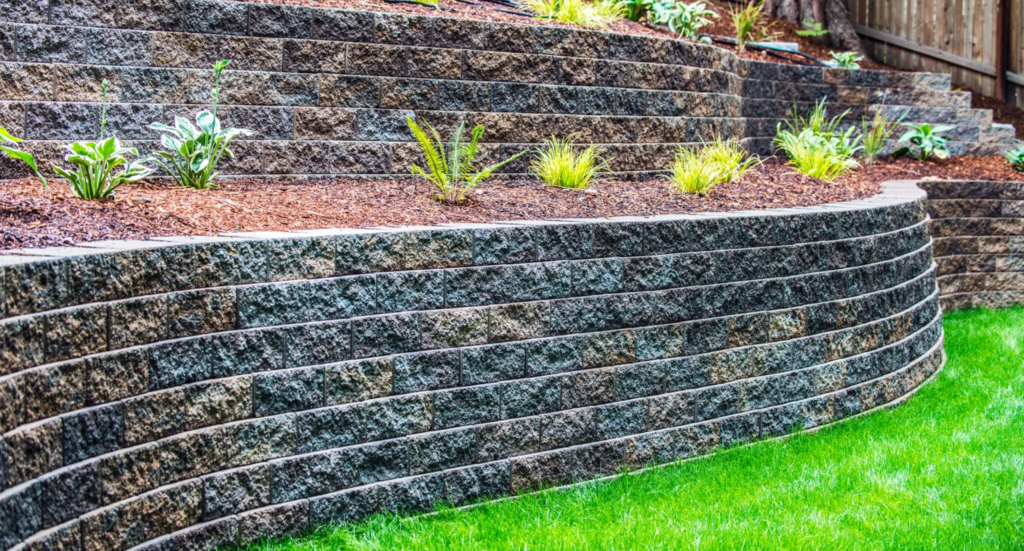
A retaining wall is designed to hold back soil across a change in elevation. When properly planned and constructed, it can help organize a sloped landscape and create areas suitable for certain outdoor uses.
For example, a homeowner might want a patio adjacent to the house, but the backyard drops away before there is enough room for the desired layout. A retaining wall may be one component of a design that creates the required space.
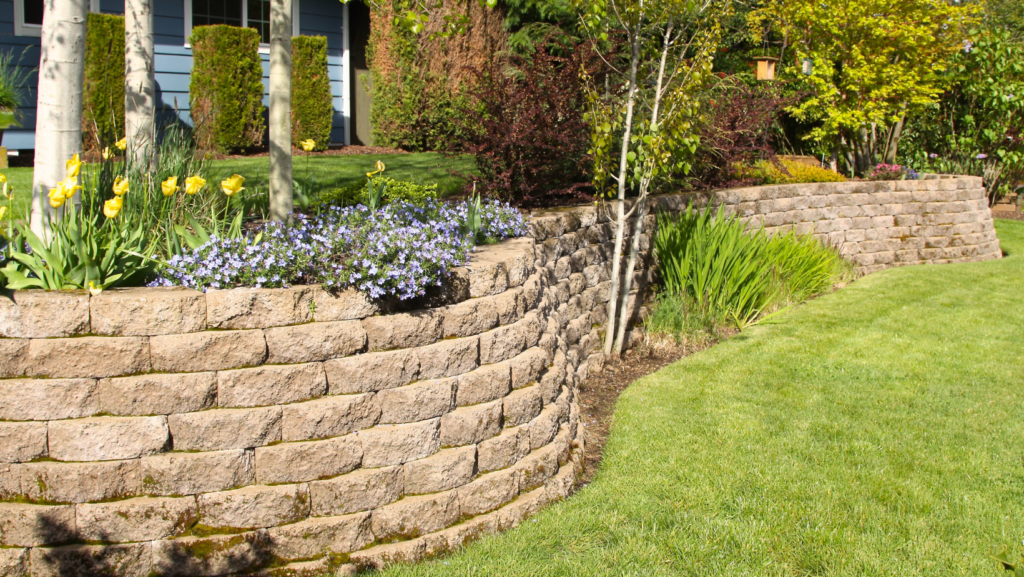
Other projects use retaining walls to define landscape beds, establish separate levels, or support a new outdoor living arrangement.
When Might a Retaining Wall Make Sense?
- Creating a level area: A wall may help accommodate a patio, lawn, or planting area where the existing elevation changes significantly.
- Working with limited space: A wall may be considered when a gradual grading transition would use too much of the available yard.
- Building separate landscape levels: A terraced design may organize planting beds, paths, and usable areas at different elevations.
- Replacing an existing wall: A project may involve evaluating a deteriorating wall and planning improvements to the surrounding landscape.
Retaining walls also require careful consideration of drainage, the soil being retained, nearby loads, foundations, and the wall system design.
Don’t select a wall based on appearance or height alone. Its design must suit the property and comply with applicable requirements.
Learn more about Vision Green’s retaining wall installation services in Charlotte, including material options and projects involving slopes and outdoor living areas.
Option 3: Combine Grading, Retaining Walls, and Drainage
Some sloped backyards need more than one type of improvement to achieve the homeowner’s goals.
Consider a property where the owner wants a patio, usable lawn space, and a planted slope. Depending on the site, the plan might involve modifying the grade, installing a retaining wall, and addressing how water moves through the newly arranged landscape.
These elements should be considered together rather than treated as unrelated projects.
Why Drainage Matters on a Sloped Property
Rainwater moves across a property according to the ground’s contours, surface conditions, and available drainage routes. Concentrated runoff can carry soil downhill, contribute to erosion, or collect in lower areas.
Changing the grade or installing a retaining wall can also affect how runoff reaches and moves around those features.
Depending on the conditions, a drainage plan may involve grading adjustments, swales, surface collection drains, subsurface drainage, or other improvements.
The appropriate method depends on the water source, soil, available discharge locations, and the proposed work. Not every sloped backyard needs a French drain, and a retaining wall does not automatically solve an existing drainage problem.
If water collects in your backyard or erosion is affecting the slope, explore Vision Green’s yard drainage services in Charlotte.
Why Planning the Work Together Matters
If a project involves grading, a wall, and a new patio, it’s useful to evaluate the intended finished elevations and drainage before construction begins.
Planning the complete project can help identify issues such as equipment access, soil removal, suitable wall placement, drainage routes, and how disturbed areas will be restored.
This does not mean every sloped yard needs extensive construction. It means the recommendations should account for the overall property rather than one isolated feature.
When Is It Better to Keep Part of the Existing Slope?
Sometimes, the most practical approach is to work with the yard’s natural shape rather than trying to eliminate every elevation change.
For example, a homeowner may be able to create a usable seating area in one location while retaining a landscaped slope elsewhere. Another property may benefit from a combination of planted areas, defined pathways, and a smaller usable lawn.
Keeping part of the slope may also reduce the amount of excavation or soil movement required, depending on the project.
Landscaping Ideas for Sloped Areas
- Planted slopes: Suitable shrubs, groundcovers, and other plants can provide visual interest and help protect soil surfaces.
- Terraced planting areas: Multiple levels can organize the landscape and create distinct planting spaces, subject to appropriate design.
- Paths and steps: Thoughtfully located access routes can connect different areas of the backyard.
- Mulched landscape beds: Properly designed and maintained beds can be an alternative to turf in areas that are difficult to mow.
- Smaller outdoor living spaces: A well-placed patio or seating area may be more practical than attempting to flatten the entire yard.
Plant selection, maintenance needs, soil conditions, and erosion control all matter. Vegetation can be part of a slope-management plan, but planting alone is not a substitute for needed structural or drainage work.
Grading vs. Retaining Wall
Neither option is automatically better. The choice depends on the amount of elevation change, available space, intended use, and existing site conditions.
| Your Backyard Goal | Possible Approach to Evaluate |
|---|---|
| Correct uneven lawn areas | Localized leveling or grading |
| Create space across a significant elevation change | Retaining wall, grading, or a combined design |
| Prepare space for a patio | Site preparation, grading, and possibly a retaining wall |
| Improve access between upper and lower areas | Landscape layout changes, steps, paths, or terraced areas |
| Address runoff or erosion | Evaluate drainage, grading, stabilization, and any structural needs |
| Improve appearance while keeping the slope | Appropriate planting, landscape beds, and access improvements |
These are planning considerations, not project specifications. A site assessment is necessary to determine which approaches suit a particular property.
What Affects the Cost of Improving a Sloped Backyard?
The cost of transforming a sloped backyard depends on the work required, not simply the size of the lawn.
Important factors may include:
- Elevation change: The amount of soil that needs to be moved or retained.
- Site access: Whether equipment and materials can reach the work area safely and efficiently.
- Soil and ground conditions: Existing fill, drainage conditions, and site preparation requirements.
- Existing features: Fences, trees, patios, utilities, irrigation components, and nearby structures.
- Retaining wall requirements: Wall materials, drainage, reinforcement, engineering, and construction details where applicable.
- Drainage work: The source of runoff, collection methods, and a suitable discharge route.
- Restoration: Sod, planting, mulch, hardscapes, or other work needed after construction.
For homeowners comparing proposals, ask what is included in excavation, material handling, drainage, wall construction, site preparation, and restoration.
A reliable project quote should reflect the property and proposed scope rather than relying on a single general price per square foot.
Do You Need Permits or Engineering for a Sloped-Yard Project in Charlotte?
Some grading and retaining wall projects involve permitting, design, drainage, or other requirements. What applies depends on the property’s jurisdiction, the work being proposed, and site conditions.
Retaining-wall design requirements may be affected by the wall system, retained soil, nearby structures, property boundaries, and the combined effect of multiple walls. Permit requirements and professional engineering requirements are not necessarily the same.
Grading also needs to account for lawful stormwater movement. Work should not obstruct existing drainage or create flooding problems for neighboring properties.
Before construction, verify the requirements applicable to the specific project. Mecklenburg County provides information through its Code Information & Resource Center.
Excavation also requires utility-location precautions. Visit North Carolina 811 for information about submitting a locate request before digging. Privately owned underground lines may require additional locating arrangements.

What Should You Have Ready When Requesting a Sloped-Yard Quote?
You do not need to decide in advance whether your backyard needs grading, a retaining wall, or both. However, a few details can help explain your goals and the existing conditions.
- Your main goal: Do you want a patio, more usable lawn, improved access, planting areas, or help with erosion?
- Property location: Provide the project address so the site and service area can be identified.
- Photographs: Take pictures from the house toward the lower yard and from the bottom looking uphill, if those locations can be reached safely.
- Approximate dimensions: Estimate the size of the area you want to improve.
- Access limitations: Mention gates, fencing, narrow side yards, or existing structures that may affect access.
- Water problems: Describe standing water, erosion, or runoff, including when it occurs.
- Existing improvements: Note patios, retaining walls, landscaping, or other features you would like to keep.
Sharing this information helps begin a productive conversation about the project. The final scope should still be based on the property’s conditions and applicable requirements.
Frequently Asked Questions About Sloped Backyards
Can you level a sloped backyard without a retaining wall?
Sometimes. If there is enough space to transition between elevations and the ground conditions support the work, grading may provide the desired improvement. Other properties may require a retaining wall or a different landscape design. The decision depends on the slope, property boundaries, drainage, and intended use.
Do I need a retaining wall for a backyard patio?
Not necessarily. A patio may be possible through appropriate site preparation and grading alone. When a significant elevation change limits the available space, a retaining wall may be part of the proposed design. The patio location, finished elevations, soil conditions, and nearby structures all need consideration.
Will grading stop water from collecting at the bottom of my yard?
Grading can improve surface runoff in some situations, but it is not a guaranteed solution for every drainage problem. Existing runoff sources, soil infiltration, and available drainage routes should be evaluated before choosing a method.
Can a sloped backyard be improved without major excavation?
Possibly. Depending on the homeowner’s goals and the slope’s condition, landscaping, planting beds, pathways, or a smaller outdoor living area may be practical alternatives to extensive earthwork. Any erosion, drainage, or stability concerns should still be addressed.
Is a retaining wall always the best solution for erosion?
No. Erosion can have several causes, including concentrated runoff and exposed soil. Appropriate grading, vegetation, surface stabilization, drainage improvements, or engineered structural work may be considered depending on the conditions. A retaining wall should not be treated as a universal erosion-control solution.
Can Vision Green help with both grading and retaining walls?
Yes. Vision Green Landscape offers yard grading services, retaining wall installation, and drainage improvements in the Charlotte area. Contact the team to discuss your property, goals, and next steps.
Ready to Make Your Sloped Backyard More Usable?
You don’t have to know whether the answer is grading, a retaining wall, or a combination of improvements before contacting Vision Green Landscape.
Tell us what you want to change about your backyard, where the property is located, and any concerns about slope, drainage, or access. Our team can review your information and discuss the appropriate next step toward a project quote.
Discuss Your Sloped-Yard Project
Prefer to call? 704-910-1941