Fixing Downspout Drainage in Charlotte Homes

Homeowner’s Guide to Pergolas, Pavilions & Patio Covers
December 27, 2025
Charlotte Homeowner’s Guide to Choosing the Right Ground Cover
January 10, 2026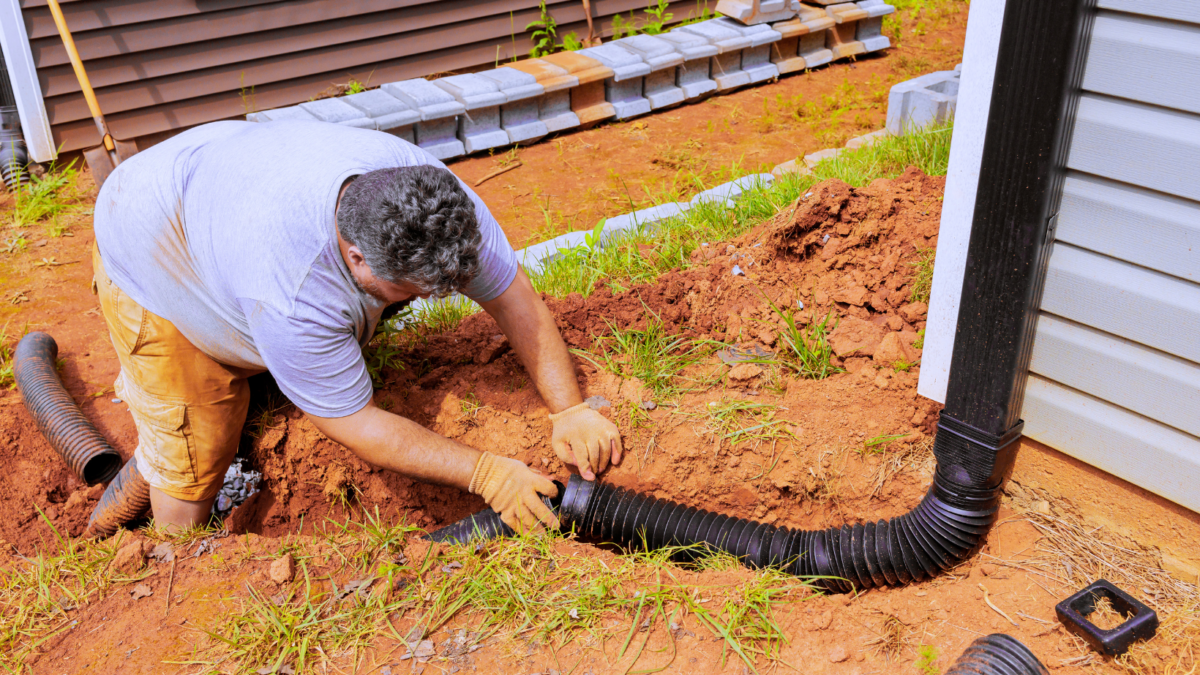
Downspout Drainage Problems in Charlotte?
If you’ve ever been having lunch out at one of Charlotte’s many outdoor dining establishments, you know that it can unexpectedly turn into a flood watch afternoon, with rain rushing off rooftops faster than the ground can soak it up. For many homeowners in Dilworth, Plaza Midwood, SouthPark, Matthews, and Steele Creek, the biggest water issues often begin with downspouts that drain too close to the house, which can cause problems.
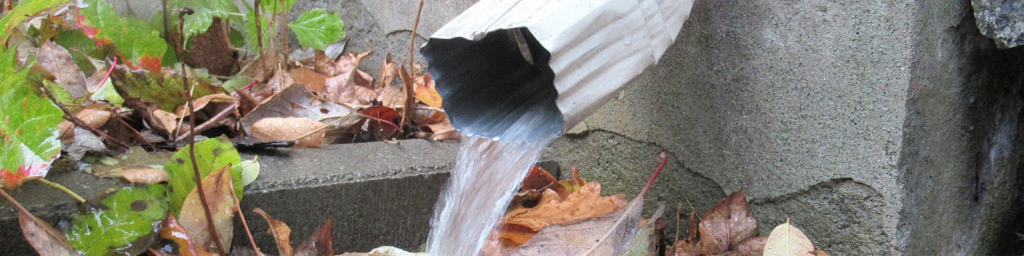
Although it may appear harmless (merely annoying to walk through), hundreds of gallons of roof runoff near your foundation can lead to pooling and seepage into crawl spaces, mulch beds, and low spots, causing musty odors, damaged landscaping, or damp walls. Installing a properly buried downspout drain line is a highly effective upgrade for homeowners in the Queen City.
When downspouts discharge water near the foundation, the soil remains saturated longer, increasing the risk of erosion, higher crawl space humidity, foundation shifting, mosquito breeding, and brick or stucco cracks… which nobody wants, especially in this pricey real estate market! Signs range from obvious puddles at corners to subtle issues like uneven settling or a persistent “damp basement smell,” even in a crawl space.
Older neighborhoods like Cotswold, Elizabeth, and NoDa have mature trees whose roots and debris sometimes clog gutters, which can be a hassle. On the other hand, newer areas in Waxhaw, Weddington, and Steele Creek start well with good grading, but this benefit can diminish when homeowners add features such as beds, edging, patios, or fences. It’s a balance of beauty and maintenance in our communities!
Give Your Gutters a Reality Check
Before installing any underground drainage system, make sure the gutters themselves are doing their job. Many Charlotte homeowners think they have a drainage issue when the real culprit is overflow from clogged, undersized, or poorly sloped gutters.
If your gutters overflow during normal rainfall, your yard never gets a chance to stay dry. Seasonal cleanings in leaf-heavy areas such as Myers Park, Dilworth, and older parts of Matthews aren’t optional. Once the gutters are functioning properly, you can focus on where the water should go next.
A good downspout drainage plan moves water away from the foundation as quickly as possible and sends it to a safe place where it won’t pool, backflow, or cause new problems.
That’s why homeowners across Charlotte rely on buried downspout drain lines. Instead of dumping water at the base of the home, these underground pipes quietly convey the runoff across the yard and discharge it at an appropriate outlet point, often a pop-up emitter in the lawn, a natural swale, or a downward-sloping edge of the yard.
A buried system is clean, subtle, and far more reliable than a loose plastic extension that gets knocked out of place every time someone mows.
Designing the Right Buried Drain Line
A buried drain line may seem simple, but it must have a consistent downhill slope to prevent water pooling. It should be solid, not perforated, to prevent early runoff, and terminate at a point that can handle the flow. Dumping water improperly trades one problem for another.
Many Charlotte homes use daylighting the back pipe, leveraging natural grading for water flow. Others might require a pop-up emitter or connection to an existing swale. Homes in Ballantyne and Steele Creek often have developer-designed stormwater paths; homeowners need assistance reconnecting downspouts. In tight neighborhoods such as Plaza Midwood or Dilworth, discharge points must be carefully selected to prevent runoff from entering neighbors’ yards or driveways.
How a Buried System Typically Gets Installed
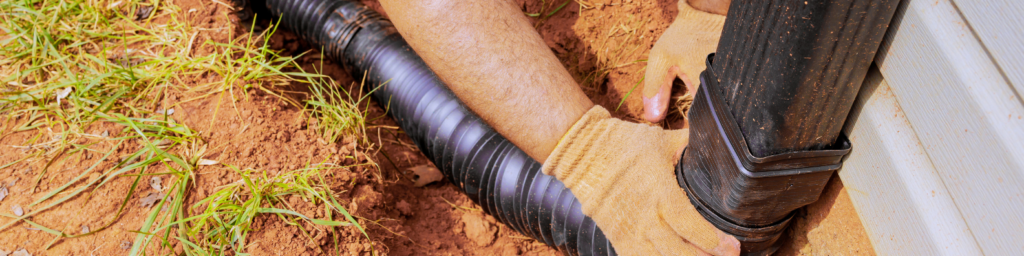
Most installations follow a process that involves determining the slope, digging a trench, installing a solid pipe, and directing it to a safe outlet. But actually, first, you’ll need to mark the utility lines through NC 811. Then comes trenching, which must stay deep and consistent enough to maintain slope. Tree roots, irrigation lines, and compacted soil can complicate the process. When connecting the downspout, make sure no loose connections that can later separate and discharge water underground at the foundation.
Before backfilling, the system should be flushed with a hose to ensure fast, unobstructed flow. Only then is the trench closed and compacted, allowing the lawn to settle evenly over time.
When everything is done correctly, the system works invisibly. When it isn’t, the first heavy storm will tell you.
Mistakes Charlotte Homeowners Make
Even with good intentions, many Charlotte homeowners accidentally create drainage problems that lead to standing water, crawl space moisture, or foundation issues.
These are the top issues we see homeowners have…
- Using a perforated pipe instead of a solid pipe allows roof runoff to seep into the soil adjacent to the foundation.
- Ending the drain line too close to the house allows water to pool underground instead of being safely carried away.
- Creating dips or “bellies” in the trench, where debris collects and eventually clogs the system.
- Failing to maintain a steady downhill slope causes slow drainage and backups during heavy rains.
- Overlooking grading problems, which continue to push water toward the home even if the downspout is buried.

Not Sure If You Need More Than Downspout Work?
Charlotte’s weather isn’t changing soon, but your home can be prepared. However, drainage isn’t always enough. If your yard has low spots, uphill water runoff, or areas that stay wet, consider grading, swales, or French drains. Often, the best long-term drainage solutions combine multiple methods rather than relying on a single process.
A properly designed buried downspout drain line keeps rainwater flowing exactly where it should, away from your home, out of your crawl space, and off your landscaping. No more puddles at the corners, no more soggy mulch beds, and no more guessing where all that water is going. If you’re ready for a drier, healthier yard, contact us for a fast, friendly quote!