


Yard Restoration After Construction in Charlotte
The Construction Is Finished. Your Yard Isn’t!
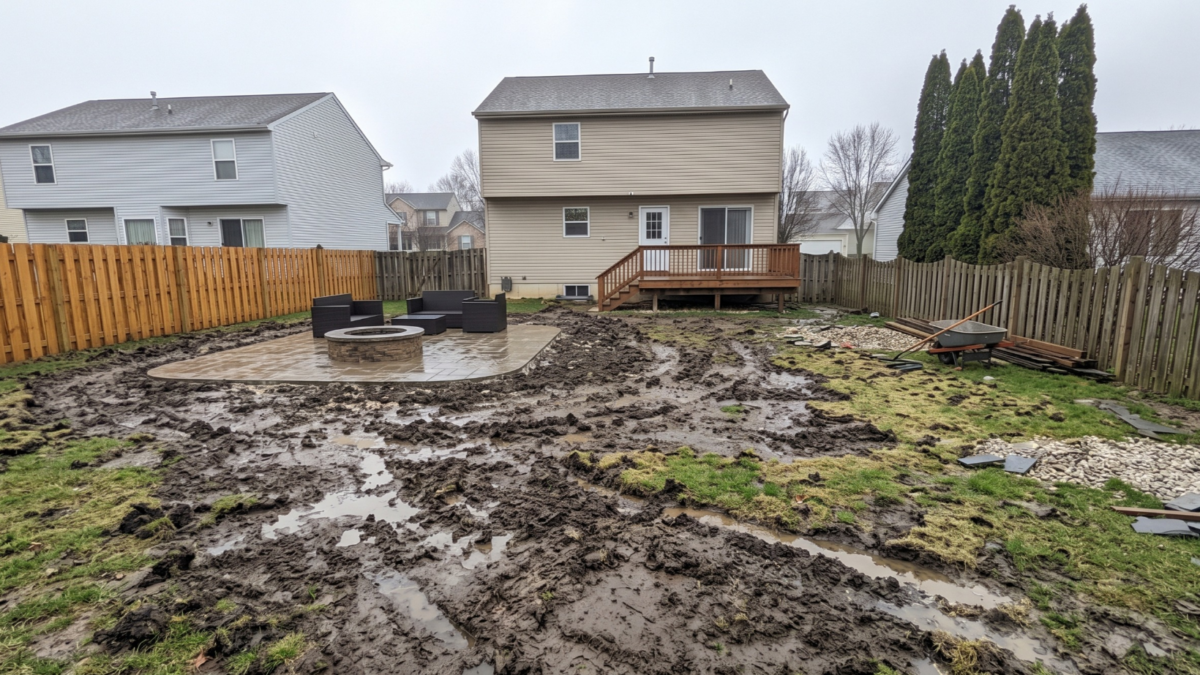
The dumpster is gone. The new addition, pool, or backyard project is finished. But the equipment’s route is still bare, the lawn has deep ruts, and rain collects where it never did before.
It is tempting to order sod and cover the damage. Sometimes the repair is fairly limited. Other times, the lawn is showing what happened underneath it: compacted soil, disturbed drainage, buried construction material or ground that was never prepared for grass.
Vision Green Landscape helps Charlotte-area homeowners with grading, drainage, and sod installation. This guide explains what to check before restoring a construction-damaged yard, so the finished lawn starts with the preparation it actually needs.
First, Find Out What “Finished” Means
Before hiring another company, review the original project scope with your contractor. “Site cleanup,” “rough grading,” and “lawn restoration” can describe different work. Ask what remains included in the original agreement and what needs a separate proposal.
Walk the property together if possible. Identify the construction area, equipment route, material-storage areas, and anything that appears damaged. Keep dated photographs and copies of the relevant plans.
Clarify who is responsible for leaving each area ready for its next use. A new restoration proposal should identify the remaining work rather than duplicate something already included in the original project.
Vision Green’s article about working alongside construction contractors explains how landscaping can connect with the larger job. Share the remaining construction schedule early so new grass does not end up in the path of another delivery.
A Tire Rut and Compacted Soil Are Different Problems
A rut is visible. Compaction may extend beyond the tracks into places where equipment repeatedly traveled, or materials sat.
Soil compaction reduces the pore space available for air, water, and roots. Wet soil is especially vulnerable. NC State Extension’s soil guide explains how compaction limits infiltration and root growth, and why working soil when it is too wet can damage its structure.
Adding topsoil may hide the tracks without correcting a compacted layer beneath them. Soil condition needs to be part of the restoration plan—not just the amount of sod needed to cover the area.
Core lawn aeration can help relieve compaction in some existing lawns. It is not a substitute for removing construction debris, correcting deep ruts, or restoring drainage. The treatment should match the actual damage.
Check the Water Route Before Choosing the Lawn Finish
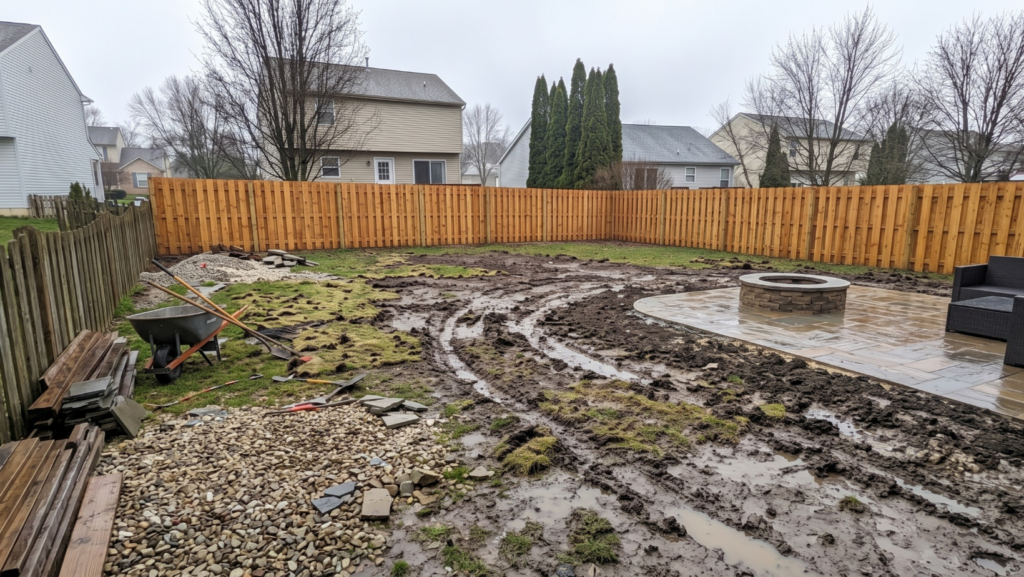
Look at the transitions around the completed project. Does water collect where the new patio meets the lawn? Has a downspout moved? Did cleanup fill a shallow drainage channel? Are soil piles blocking a route that used to carry runoff?
Take photographs from a safe location after rain. Compare them with earlier photographs and the drainage information in the project plans. New pooling is a reason to investigate, not proof that every area needs a new drain.
Landscape grading and excavation may be part of restoration where the ground needs reshaping. Where collection or redirection is needed, discuss yard drainage solutions before installing grass.
The goal is not to make the whole yard perfectly flat. The finished surface needs appropriate slopes and transitions around the house, patios, walkways, and existing drainage features. Review proposed changes against the project plans before altering them.
If water is entering the building or there is an apparent structural problem, involve the original contractor and an appropriately qualified professional. A lawn-restoration quote should not replace that assessment.
Remove the Debris, but Protect What Needs to Stay
Look for leftover gravel, concrete fragments, wood scraps, and other construction material in the intended lawn area. Agree on what needs removal rather than allowing unwanted material to be buried beneath new soil or sod.
Identify irrigation components, existing drains, tree roots, planting beds, and remaining erosion-control measures. Confirm with the responsible contractor before moving protective fencing or controls that may still be needed.
Before digging or mechanical soil preparation, confirm the utility-locating arrangements and that the appropriate responses have been received. NC811’s guidance on private utility lines explains that the standard 811 process does not locate private irrigation lines, invisible pet fences, or electrical lines serving outbuildings. Private lines need separate locating.
Lawn soil and structural fill serve different purposes. Do not loosen material supporting foundations, slabs, or walls as part of lawn preparation. Work around established tree roots also needs a separate assessment before excavation or changes in soil level.
Test the Soil You Have Now
The ground left after construction may not resemble the soil that supported the old lawn. Excavation and grading can expose subsoil or leave different materials in separate parts of the property.
A soil fertility test helps guide decisions on pH and nutrients. It doesn’t diagnose compaction, set the correct grade, or explain every drainage problem. Those conditions still need a site assessment.
Mecklenburg County Cooperative Extension’s soil-testing page provides sampling and submission instructions. Its published pickup options include the office at 2415 Lester Street and selected libraries, including Myers Park and Plaza Midwood. Check the current list and availability before visiting.
Residents collect their samples and send them to the North Carolina Department of Agriculture & Consumer Services laboratory; the county office does not perform the analysis. Follow the instructions for sampling distinct soil areas separately, and use the results before deciding on lime or fertilizer.
To Sod or Seed?
Once the ground is ready, consider the existing grass, available sunlight, intended use, installation timing, and access to water. The grass that suits one part of the property may not suit every affected area.
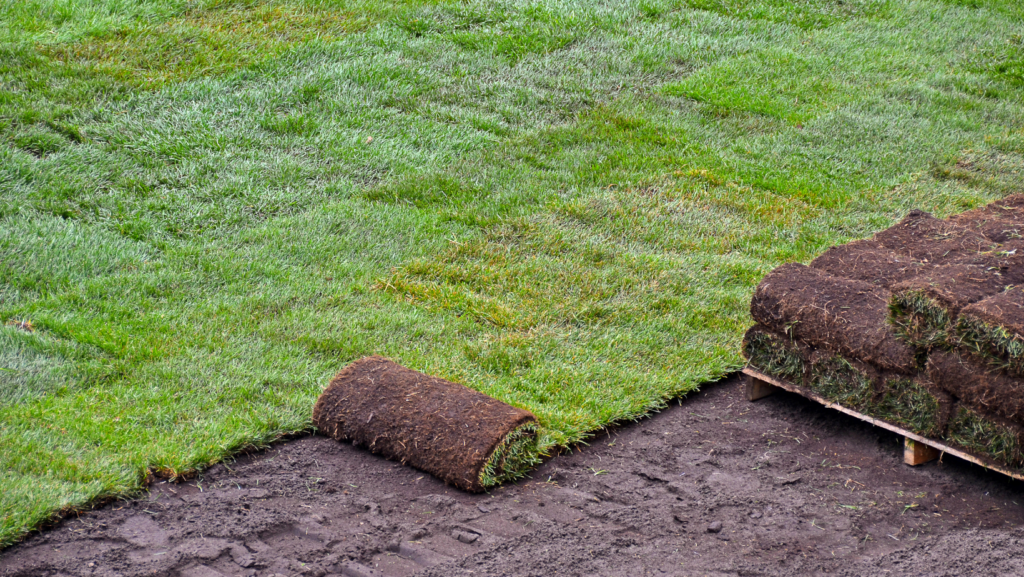
Sod installation provides an immediate grass surface, not an immediately established lawn. New sod still needs to root into the prepared soil. Seed needs time to germinate and fill in, and both approaches require establishment care.
For the Piedmont, tall fescue is generally best seeded in early fall. Warm-season grasses such as bermudagrass and zoysiagrass have different preferred establishment windows. NC State’s lawn-establishment guidance distinguishes grass types, regions, and planting methods; sod and seed do not always follow the same calendar.
A project finishing in December needs a different discussion from one finishing in May. The construction completion date alone does not determine the right planting method or when the lawn will be ready for regular use.
Confirm the Watering Plan Before Ordering Grass
Discuss how the entire repaired area will be watered, who is responsible, and how the plan will change as grass establishes. For Charlotte Water customers, check Charlotte Water’s current watering notices before scheduling installation. Properties served by another utility should check that provider’s rules.
Do not assume new sod or seed automatically permits extra watering during restrictions. Confirm the applicable rules and any required approval directly with your water provider.
If planting must wait, ask the responsible contractor how disturbed soil will be protected from erosion in the meantime. Waiting for the right planting conditions should not mean leaving the site unprotected.
Keep the Remaining Construction Off the Finished Lawn
Before final lawn work, confirm whether anyone still needs to deliver stone, install fencing, finish a deck or bring equipment through the yard.
Finish work that needs equipment access, resolve the ground and drainage, prepare the lawn area, then install the agreed surface and follow the establishment plan.
A rebuilt gate can restrict equipment access. A final delivery can cross the area intended for new sod. Check those details before the lawn goes in, then agree on how people, pets and equipment will be kept off vulnerable areas during establishment.
What Should a Yard-Restoration Quote Include?
Ask for a written scope that separates the yard’s condition from the finish you want. The proposal should identify which of the following are included:
- Removal: Construction debris, unwanted surface material, old turf, and agreed hauling.
- Ground preparation: Soil handling, grading, and the treatment proposed for the affected lawn areas.
- Drainage: Any changes to collection points, runoff routes, or existing systems.
- Lawn installation: The area, grass selection, seed or sod, and preparation included in the price.
- Completion and care: Cleanup, access-route repair, watering responsibilities, traffic restrictions, and any follow-up included.
Ask how additional work will be documented and approved if buried debris or another unexpected condition is found. Clarify where the restoration contractor’s responsibilities end and the original builder’s responsibilities begin.
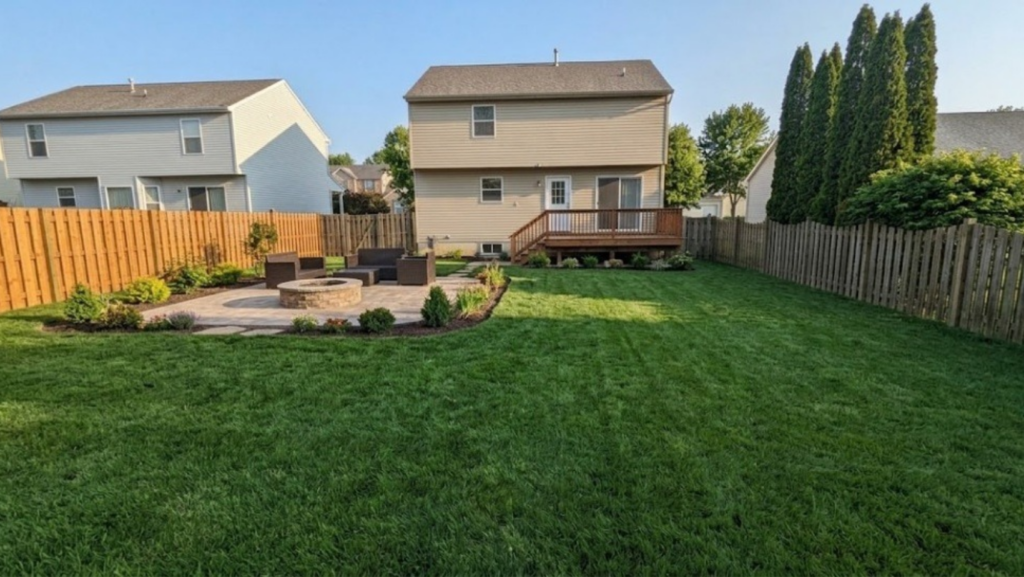
Get the Yard Ready for Everyday Use Again
Tell Vision Green what construction took place, which areas were affected, and what work remains. Include your property address, approximate lawn area, access limitations, and any water problems that appeared during the project.
Have before-and-after photographs and the relevant site plan or restoration scope available. Our grading, drainage, and sod-installation services can help connect the finished lawn with the preparation it needs.
Request a free quote to discuss the next step. Working toward a deadline? Include it with your inquiry so the scope, planting conditions, and available schedule can be discussed before you commit.
Request a Yard Restoration Quote
Or call 704-910-1941.
Yard Restoration After Construction FAQs
Can I put new sod straight over construction damage?
Review the ground first. Sod does not correct buried debris, deep ruts, soil compaction or a changed drainage route. Resolve the conditions that would prevent the new lawn from establishing before covering them.
Is lawn aeration enough after heavy equipment has crossed the yard?
Core aeration can help some lawns with compaction, but the damage determines the repair. It does not remove buried rubble, reshape deep ruts, or correct drainage. Ask what preparation your specific lawn area needs.
Can we use the lawn as soon as the sod is installed?
Do not plan on unrestricted use immediately. New sod needs time to root. Agree on watering, mowing, and traffic guidance with the installer, and keep remaining construction equipment off the repaired area.
What should I share when requesting a yard-restoration quote?
Provide your address, construction details, affected areas, remaining work, approximate lawn area, access limitations, and any new water problems. Have photographs and the relevant site plan or restoration scope available.
