Retaining Wall Cost in Charlotte

10 Easiest Native Plants to Grow in Charlotte’s Climate
November 25, 2025
Homeowner’s Guide to Pergolas, Pavilions & Patio Covers
December 27, 2025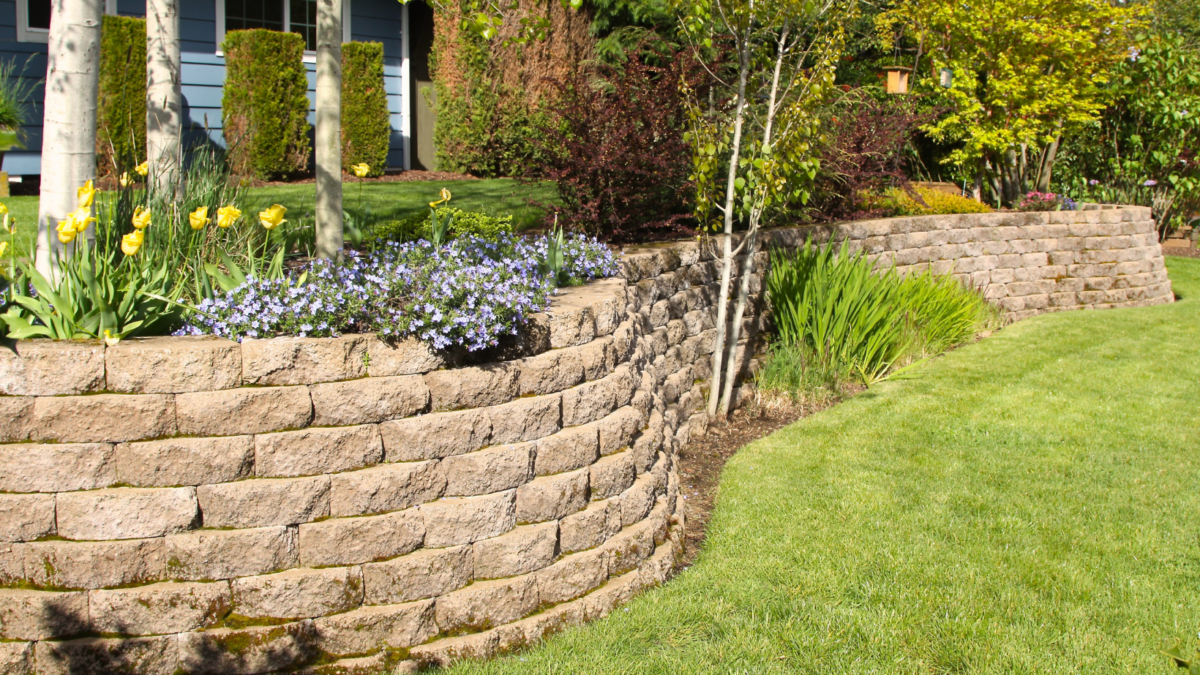
Block, Concrete, or Stone?
If your backyard in SouthPark is sloping too hard for a proper patio, or your front yard in Dilworth is washing away with every storm, chances are someone’s told you it’s time to build a retaining wall.
Retaining walls reshape your outdoor space. They help prevent erosion and frame your landscape with structure and style.
Whether you’re leaning toward block, poured concrete, or natural stone, this guide will help you understand pricing, cost drivers, and the expected investment in Charlotte.
What Really Affects Retaining Wall Pricing?
The size of your wall, the slope of your yard, the soil type, and the ease of getting equipment in and out of your property all play a huge impact on how much a retaining wall can cost.
Keep in mind that A taller wall usually needs more structural support and deeper footings while A tight backyard in Plaza Midwood may require additional labor to deliver materials.
When replacing an old wall, include demolition and haul-away costs. Charlotte’s red clay soil drains poorly, so a drainage gravel base, filter fabric, and drain pipe are essential for durability.
How Retaining Wall Costs Are Measured
The most common way retaining wall projects are priced, especially by contractors in the Charlotte area, is based on the square footage of wall face, which refers to the visible vertical surface area of the wall once it’s built.
This differs from measuring total yardage or material quantities alone. Instead, you’re paying for the total amount of exposed wall area that needs to be excavated, built, reinforced, and finished.
To calculate this, multiply the length of the wall by its average height. For example, if your wall runs 30 feet across and averages 3 feet tall, it would have 90 square feet of wall face (30 × 3 = 90). That number serves as the baseline for estimating labor, materials, equipment time, and drainage requirements.
So when you see pricing ranges like $35 to $50 per square foot, they’re referring to each square foot of wall face, not the footprint or the square footage of your yard. It’s also worth noting that while this square-foot method captures the main wall structure, add-ons like steps, capstones, curves, return walls, and site-specific drainage solutions can increase the total cost.
Block Walls
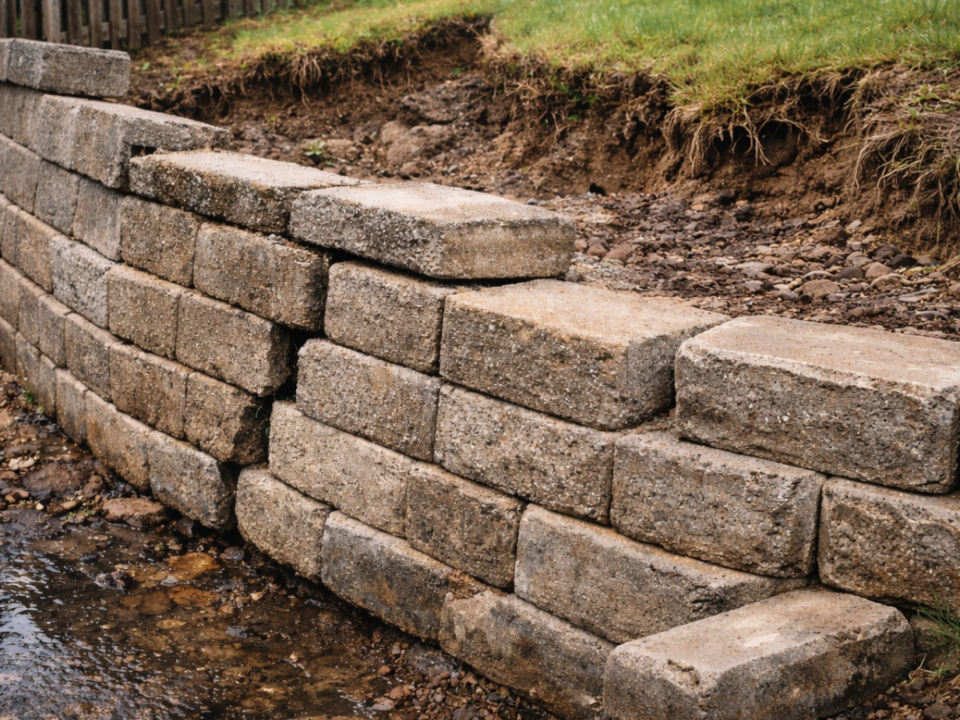
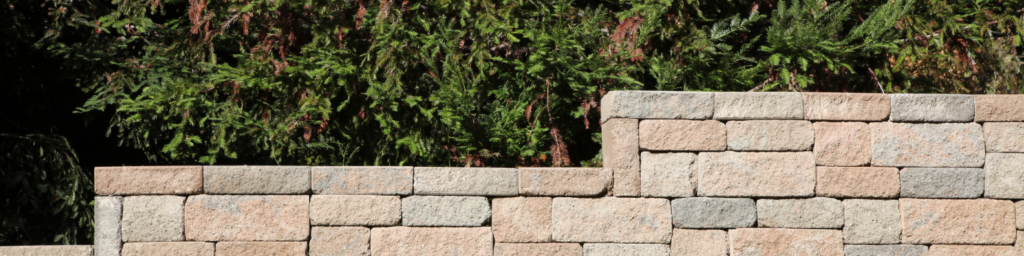
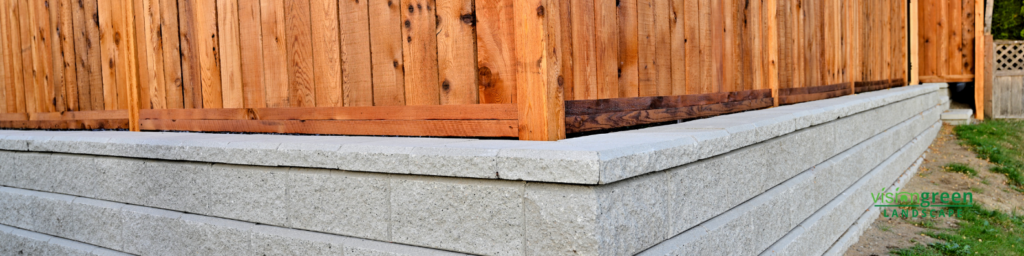
Block retaining walls, also known as segmental or modular blocks, are the most prevalent type you’ll see in Charlotte. These walls are constructed from interlocking concrete units that fit together like puzzle pieces. They are neat and uniform, available in many colors and finishes.
These features provide an excellent mix of affordability, durability, and visual appeal, complementing elements such as steps, fire pits, and patios, making them adaptable to both formal and natural settings. They are particularly well-suited in neighborhoods such as Ballantyne or Matthews, where sloped terrain requires structural support while homeowners prefer a sophisticated look.
Expect to pay between $30 and $50 per square foot, depending on wall height, access, and drainage requirements. Prices can increase for walls taller than 4 feet that require reinforcement or geogrid layers.
Poured Concrete Walls
Poured concrete offers a sleek, modern look, ideal for contemporary or minimalist homes, providing a different vibe than interlocking pieces.
Plus, it’s durable and fits well in tight spaces for strong walls without taking up much room. You can also get creative with curves, angles, and finishes. If you’re designing a modern landscape in NoDa or SouthEnd, concrete is a great option.
Most poured concrete retaining walls fall in the $35 to $60 per square foot range, but prices can go higher with decorative finishes, staining, or added complexity. While it’s often more expensive up front, it’s built to last.
Natural Stone Walls
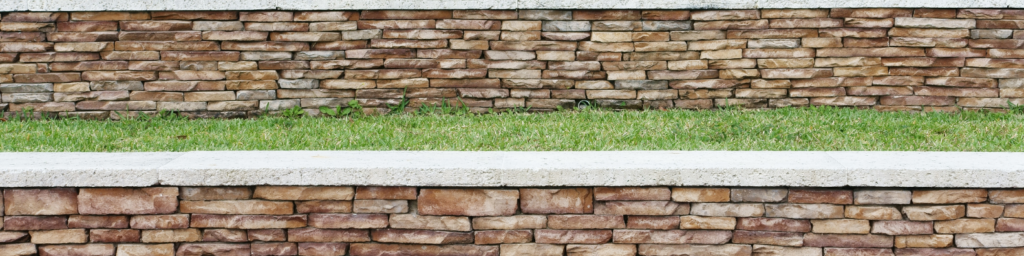
If your home has a classic style or if you want to make a memorable impression, natural stone is the perfect focal point. These walls are handcrafted from stacked fieldstone, granite, or regional stones, offering timeless, rustic charm that works well with neighborhoods like Myers Park or Cotswold. Nothing beats natural stone.
Each stone wall is distinct, and its appearance only improves with age. Natural stone walls typically cost $45 to $75 per square foot, with premium projects exceeding $100 per square foot, depending on the stone type and layout. It’s a bigger investment, but if curb appeal is a top priority, stone delivers.
A Quick Budget Example
Let’s go back to that 30-foot-long, 3-foot-tall wall, 90 square feet total. Keep in mind, these ranges are starting points. Complex layouts, multi-level designs, stairs, drainage solutions, and site prep all affect the final number. But this gives you a ballpark before you reach out for quotes.
But a ballpark estimate could be…
- Block wall: $30–$50/sf = $2,700–$4,500
- Poured concrete: $35–$60/sf = $3,150–$5,400
- Natural stone: $45–$75/sf = $4,050–$6,750
Do I Need a Permit for A Retaining Wall in Charlotte?
In many cases, yes, especially for taller walls. In Mecklenburg County, you’ll likely need a permit if your wall is over 4 feet tall or supports a structure like a driveway or building. You may also need engineering plans or sealed drawings, depending on slope and soil conditions.
If your home is part of an HOA, it’s smart to review the HOA’s rules as well. Some neighborhoods require approval for visible hardscaping even if it’s functional.
What’s the Right Wall for Your Yard?
While all three options, block, poured concrete, and natural stone, can hold back soil and improve your landscape, the best choice for your project depends on your site conditions, desired appearance, and budget.
Please find below a detailed breakdown to assist in guiding your decision-making process:
- A segmental block wall offers a reliable cost-performance balance. These modular systems are stable, quick to install, and come in various colors and textures. Ideal for residential use, many can reach 4 feet tall without reinforcement, and are popular in Charlotte subdivisions with gentle slopes.
- If your site needs extra strength or you prefer a modern look, poured concrete can be a fantastic choice. Poured walls are formed and cast in a single piece, making them highly durable. Plus, they can be customized with various finishes, from sleek and smooth to textured or stained, making them a great fit for modern landscapes.
- If aesthetics is your primary goal and you’re aiming to enhance your curb appeal, natural stone offers unparalleled beauty and enduring charm. Each piece is carefully hand-placed, resulting in a unique appearance that complements historic, luxury, or wooded settings.
Get a Retaining Wall Quote That Fits Your Yard
At Vision Green Landscape, we specialize in creating custom retaining walls across the Charlotte region.
We’ll walk your property with you to assess the slope, access, and drainage, and then recommend clear options that align with your goals, style, and budget. We’re excited to help you build a retaining wall that not only looks fantastic but also stands the test of time.
Reach out for a free quote, and let’s build a wall that works as hard as it looks.