Should You Repair or Replace Your Retaining Wall?

Patios, Fences, Retaining Walls & Grading Permit Information
January 14, 2026
Best Types of Fences for Charlotte Homes
March 11, 2026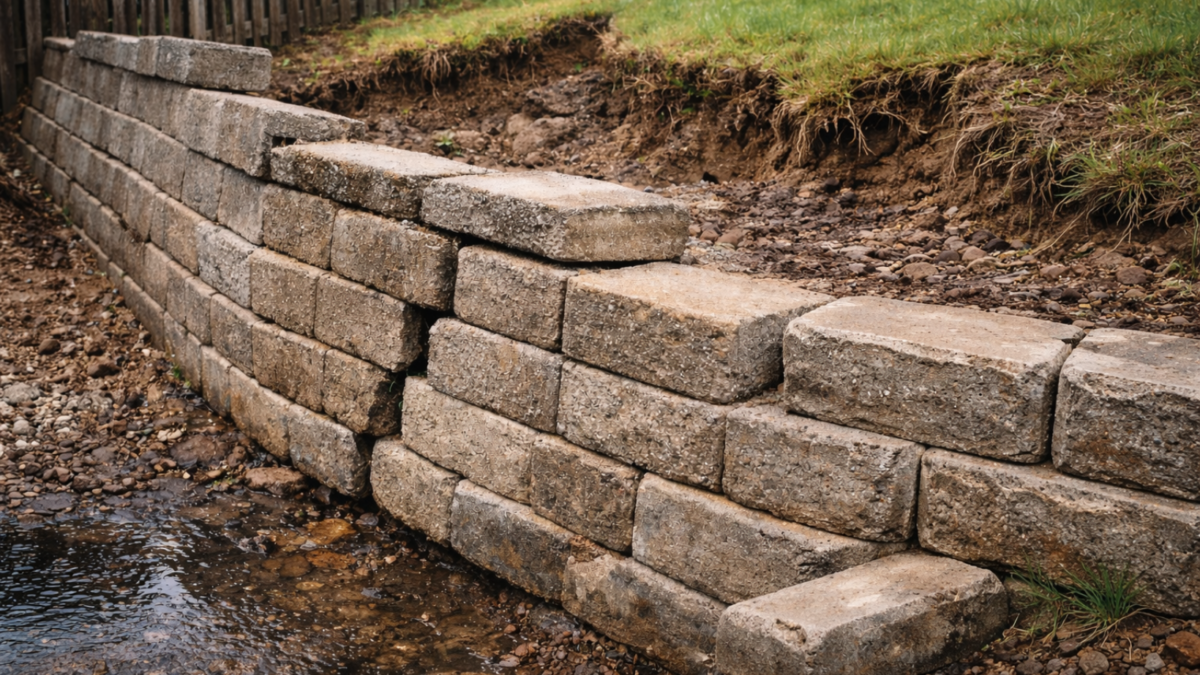
Retaining Wall Repair & Replacement in Charlotte
Is Your Retaining Wall Failing?
A retaining wall isn’t just for looks. It holds back soil, supports parts of the landscape, and needs to withstand conditions that can change over time. Water buildup behind a wall can increase pressure, but soil movement, drainage, foundations, and construction details can also affect its performance.
In the Greater Charlotte area, storms and changes in ground conditions can reveal problems that weren’t obvious before. If you notice leaning, cracking, shifting, or soil loss, have the wall evaluated rather than assuming the cause. You can also learn about retaining wall installation in Charlotte.
Early assessment may leave more repair options available, although not every damaged wall can be repaired safely. Here are nine warning signs to recognize and when to ask for professional help.
1) The “Wait… Is That Leaning?” Moment
A retaining wall that appears to be leaning, bowing, or moving out of alignment deserves attention. Possible causes include drainage problems, changes in supporting soil, unsuitable backfill, foundation movement, or deficiencies in the original construction.
Visible movement does not identify the cause on its own. If a wall is noticeably leaning or has shifted, avoid adding extra loads near it and arrange a professional assessment. The condition of the wall and the surrounding property will help determine whether repair, reinforcement, or replacement is appropriate.
2) Cracks That Feel Like a Bad Plot Twist
Long horizontal cracks, new cracks, or cracks that widen over time are reasons to investigate. They may reflect settlement, movement, loads, moisture conditions, or deterioration; a crack’s location and pattern alone do not establish its cause.
On masonry and block walls, stair-step cracking can be another warning sign that sections of the wall or supporting ground have moved differently.
If cracks are new or worsening, arrange an assessment rather than simply covering them. Patching a crack without addressing the underlying problem can conceal a condition that needs attention.
3) Gaps, Loose Blocks, or Misaligned Caps
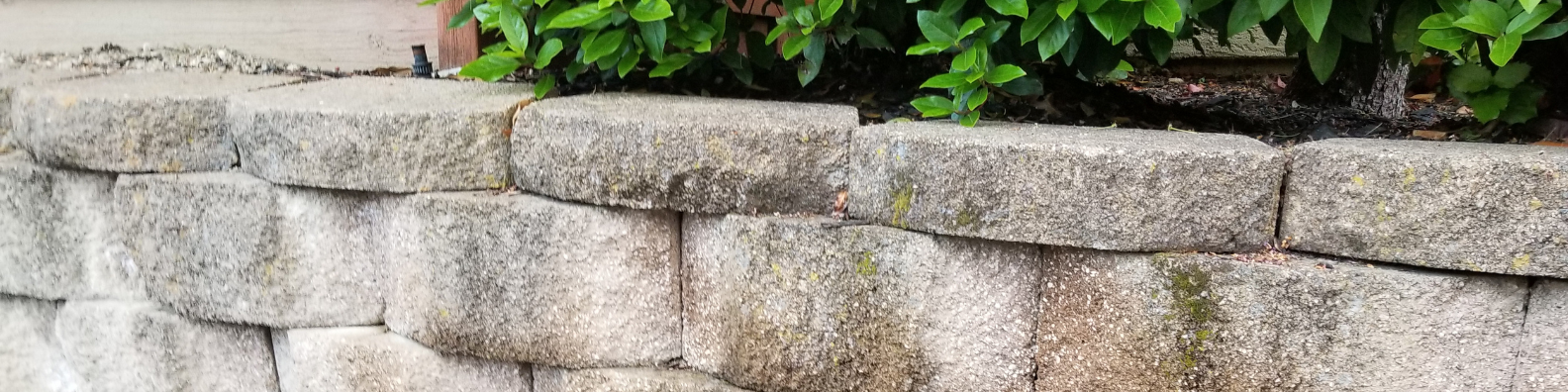
Visible gaps between blocks, stones, or timbers may indicate movement, settlement, or deterioration. Capstones that appear displaced or sections that are no longer aligned can also be signs that a wall needs attention.
Do not push, rock, climb on, or remove pieces from a wall that may be unstable. Observe it from a safe location and arrange an assessment if you notice movement, widening gaps, or other changes. The appropriate repair depends on the wall’s condition and what is causing the problem.
4) When the Ground Behind the Wall Starts Disappearing
Depressions behind the wall, mulch that keeps washing away, or soil that settles after storms should be investigated. Water may be carrying soil away, but settlement and other site conditions can also create low areas.
If soil is being lost, voids or erosion may affect the ground around the wall. Keep people and heavy loads away from suspicious areas until they can be assessed, especially if a depression has developed near the wall’s top edge.
If roof runoff could be contributing, see our guide to downspout drainage in Charlotte. Any drainage correction should be based on the actual site conditions, not assumed to be the only repair needed. Vision Green also offers yard drainage services for related runoff concerns.
5) Water Stains and White Powder
Water stains, damp areas, and white mineral deposits may appear on concrete, block, or masonry retaining walls. The white residue is often called efflorescence and can form when moisture carries soluble salts to the surface.
Efflorescence alone does not prove a retaining wall is failing. However, persistent moisture, active seepage, erosion, or deposits accompanied by cracks and movement deserve closer attention. A professional assessment can help determine whether drainage or structural repairs are needed.
6) The Top of the Wall Is Sliding Out of Line
Uneven capstones, separating joints, or a noticeable change in the alignment of the wall’s top edge may indicate movement or deterioration. The problem could involve individual capstones, the wall itself, or changes in the supporting ground.
If the wall appears to be leaning, bulging, or shifting, have it assessed rather than attempting to reset loose pieces yourself. Identifying the cause is important before deciding whether a localized repair is appropriate or more extensive work is necessary.
7) Rot, Rust, and Crumble
Timber walls can deteriorate with age and moisture exposure. Wood may rot, fasteners may loosen, and supporting components can weaken even before obvious movement appears.
Stone, block, or brick walls can show deteriorating mortar, displaced pieces, or corroded metal components. The extent of the damage matters: some conditions may allow localized repair, while others require more extensive work.
Don’t remove loose materials to investigate an unstable wall. Have the condition assessed before deciding whether repair or rebuilding is appropriate.
8) Patios and Pavement Start Moving
Sometimes the wall doesn’t wave the red flag; nearby features do. Patio pavers may separate, fence posts may lean, sidewalk edges may sink, or steps may become uneven.
Movement near a retaining wall can indicate changes in the surrounding ground or problems affecting the wall, but it does not prove the wall is responsible. Watch for trip hazards, keep people away from unsafe areas, and arrange an assessment if changes are developing.
9) “It Was Fine Until the Last Storm”
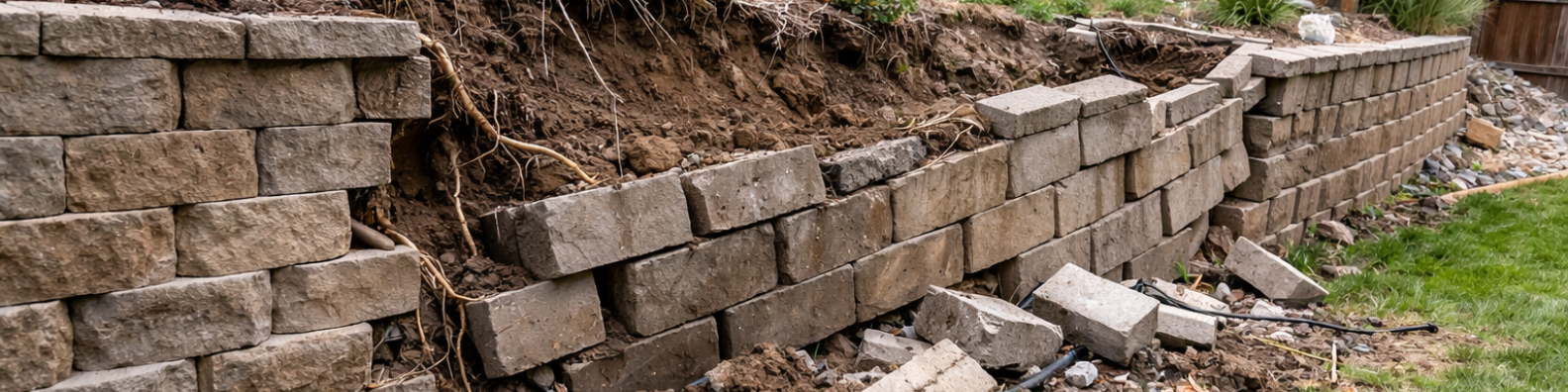
A wall that appears to change noticeably after heavy rain deserves prompt attention. Stormwater may be a contributing factor, but an assessment is needed to identify what moved and why.
If you notice sudden leaning, bulging, falling material, or new ground settlement, keep people and pets away from the wall and the ground it supports. Do not wait for another storm to seek professional advice. If there is an immediate threat to people or a structure, contact emergency services.
Know When to Bring in a Specialist
When You Actually Need an Engineer
Not every retaining wall issue requires an engineer, but professional engineering may be required or advisable when safety, nearby structures, significant wall movement, or heavy loads are involved.
If your wall supports a driveway, parking area, building foundation, or pool, involve an appropriately qualified professional early. Taller or terraced retaining walls, walls near property boundaries, and clearly leaning or bulging walls may also need an engineered evaluation or design, depending on applicable requirements.
A smaller decorative wall with limited damage may be suitable for a contractor-led repair after assessment. Requirements depend on the project and jurisdiction, so confirm necessary reviews and permits. The first priority is understanding the condition rather than assuming every wall needs rebuilding—or that a cosmetic repair will be enough.
Retaining Wall Repair vs. Replacement Cost
Homeowners often ask about the cost of retaining wall replacement, and I understand why. You want to know what you’re in for.
Cost depends on what the wall supports and what the work requires. Wall height and length, access, demolition, drainage, soil conditions, nearby loads, engineering, and permits can all affect the scope.
Delaying an assessment can allow a problem to worsen, but not every warning sign means replacement is inevitable. The right next step is to evaluate the wall and discuss what repair, reinforcement, or replacement would involve.
I’m Brenden Phillips with Vision Green Landscape, and our team helps homeowners and businesses across Greater Charlotte understand what may be happening to their retaining walls and what options are appropriate for the site.
Get a Retaining Wall Inspection
If you’ve noticed leaning, cracks, shifting blocks, or soil loss, contact Vision Green Landscape to discuss a retaining wall assessment. We’ll help you understand the next steps toward determining whether repair or replacement is appropriate.