Should You Repair or Replace Your Retaining Wall?

Patios, Fences, Retaining Walls & Grading Permit Information
January 14, 2026
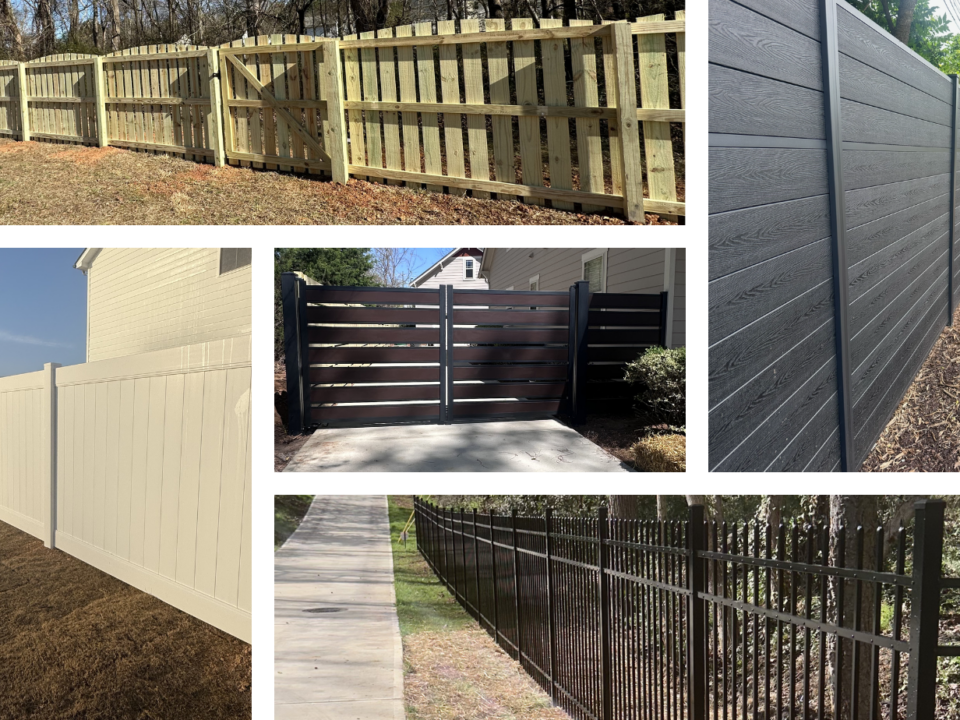
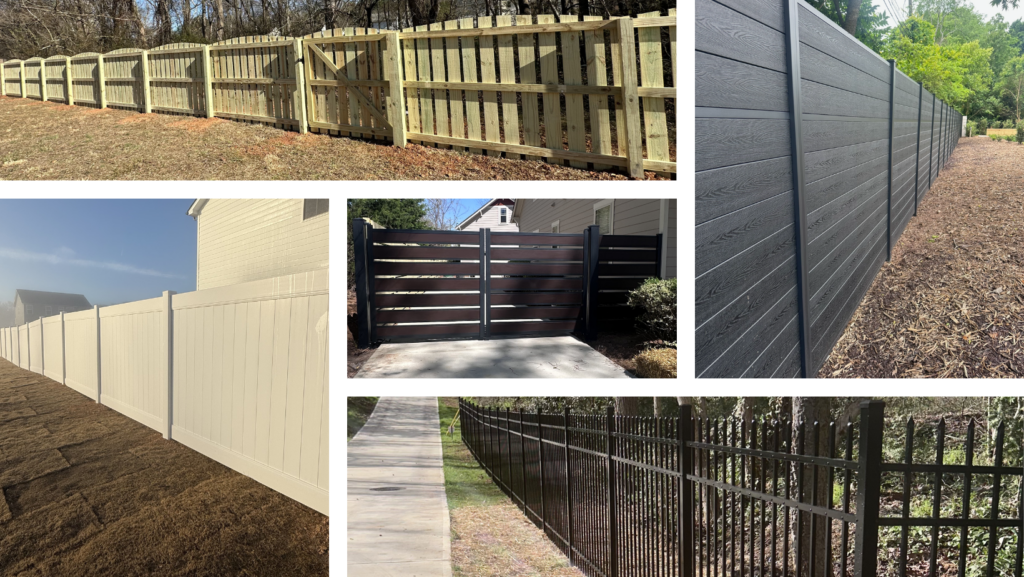
Best Types of Fences for Charlotte Homes
March 11, 2026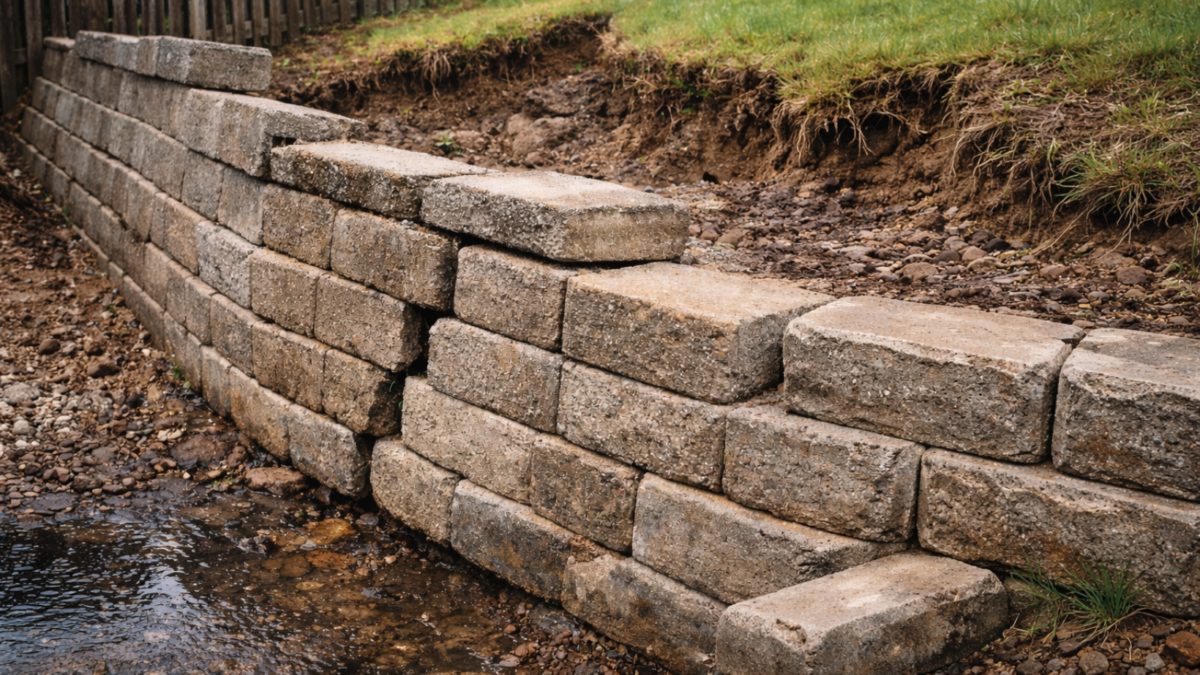
Is Your Retaining Wall Failing?
Most retaining wall failures aren’t due to poor blocks but to unseen water buildup. Water trapped behind the wall increases pressure, pushing and washing out soil, gradually making it hazardous. I’ve seen walls look fine one month but bow the next after heavy rain overwhelmed drainage, which we know is common in Charlotte.
A retaining wall isn’t just for looks; it’s working hard to support tons of soil. When it begins to shift, it’s often a sign that something behind it is changing, such as water pressure, soil movement, poor drainage, or settling ground. In the Greater Charlotte area, with its frequent heavy rains and clay-heavy soils, retaining wall issues are more common than many homeowners realize. Taking good care of these walls helps prevent bigger problems and keeps your landscape safe and secure.
Addressing a failing wall early increases the likelihood of repair rather than replacement. Once it starts failing, it rarely fixes itself and usually worsens after storms.
Here are the top warning signs your wall is in trouble, their meanings, and when to call a professional, like us!
1) The “Wait… Is That Leaning?” Moment
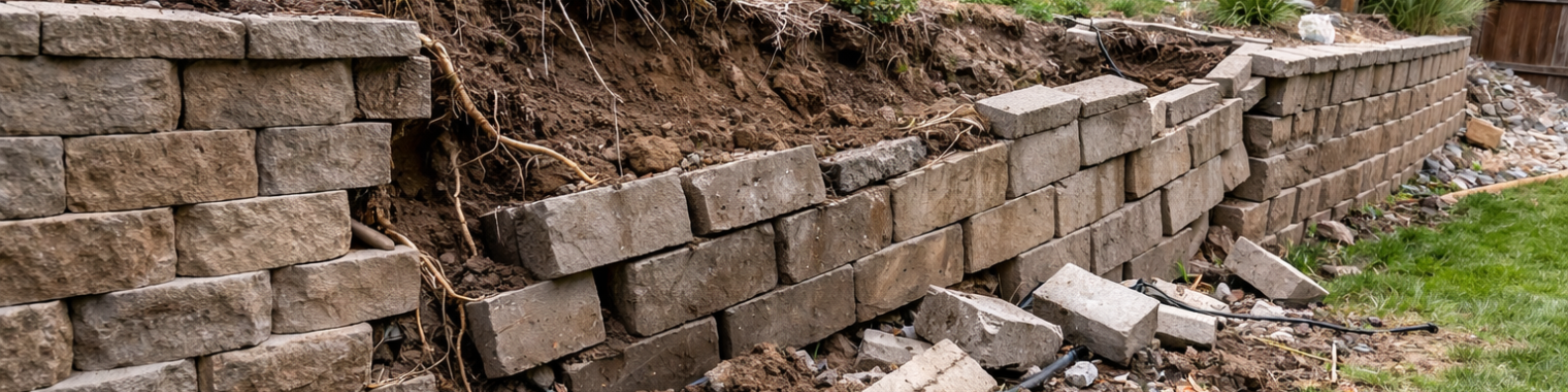
A leaning retaining wall almost always means pressure is building behind it, usually from trapped water or poorly compacted backfill. Sometimes the base was never set correctly. Sometimes surface water backs up behind the wall whenever it rains. Either way, the wall is starting to lose the fight.
leaning tends to accelerate. The more it leans, the less stable it becomes, and the more pressure it catches. If you see a lean, don’t “keep an eye on it” for six months. Get it assessed now before you’re looking at a full rebuild.
2) Cracks That Feel Like a Bad Plot Twist
Long horizontal cracks across the face of a wall, or cracks that widen over time, often indicate settlement or pressure buildup. The wall is flexing, separating, and trying to relieve stress in the only way it can.
If you have a masonry or block wall, stair-step cracking is another common warning sign. It usually means one section is shifting differently from the next, like the wall is bending around a weak spot.
If cracks are new or worsening, that’s your cue to move quickly. Patching a crack without fixing what caused it is like painting over a leak stain inside your home. It looks better for a moment, but the problem underneath is still expanding.
3) The “Gaps and Wiggles” Test
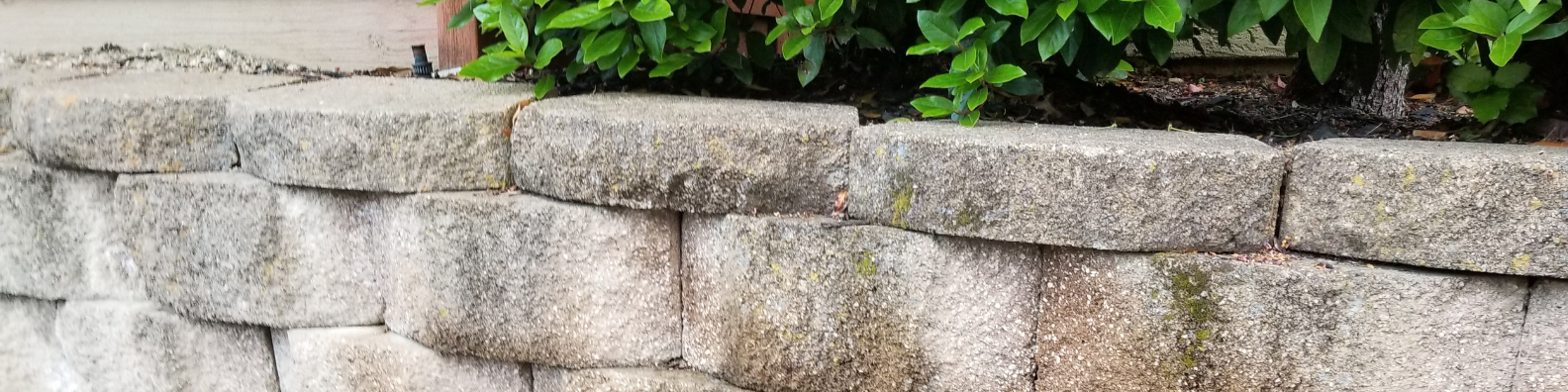
If you notice gaps opening between blocks, timbers, or stones, or the wall face looks like it’s “unzipping,” that’s movement. If you can rock a capstone or feel pieces shifting under light pressure, that’s more than wear and tear; it’s a loss of stability.
In Charlotte, these gaps often show up after rainy seasons because water is moving soil behind the wall. Soil shifts. The wall loses tight contact. Small movement becomes a bigger movement.
4) When the Ground Behind the Wall Starts Disappearing
If you have depressions forming behind the wall, mulch that keeps vanishing, or soil that seems to sink after storms, that’s a big red flag.
It usually means water is flowing behind the wall and carrying soil with it. That creates voids, empty pockets, so the soil behind the wall no longer supports it properly. Once that support is gone, the wall has to handle more pressure with less reinforcement.
This is one of the fastest paths to failure. If you’re seeing a washout behind the wall, you’re past the “cosmetic” stage. It’s time to inspect and correct drainage before the wall shifts further.
5) Water Stains and White Powder
Water stains on the wall face are often a clue that moisture is constantly traveling through it. You may also see a white, chalky residue on masonry or block walls. That’s usually mineral buildup from repeated water movement.
Water is spending too much time where it shouldn’t. That doesn’t just look messy; it signals the exact conditions that cause walls to bow, crack, and collapse.
6) The Top of the Wall Is Sliding Out of Line
If the top caps are uneven, separating, or dipping out of level, it often means the wall is rotating forward. That’s common when water pressure is pushing from behind, and the wall is losing its alignment.
This is one of the most helpful signs because it’s easy to spot early. If you catch it now, you may be able to repair a section and correct drainage before the movement spreads down the entire wall.
7) Rot, Rust, and Crumble
Timber walls in particular can degrade over time. Wood can rot, spikes can loosen, and the entire wall can lose structural strength even if it still “looks fine” at a glance.
Stone or brick walls can suffer too. Mortar can crumble. Stones can loosen. Metal connectors can corrode. The wall becomes less predictable and more vulnerable during stress events, such as heavy rain.
Once deterioration is present, repairs often become more involved. You may be looking at partial rebuilding rather than simple fixes. That’s why it’s smart to evaluate early, before the wall turns into a safety risk.
8) Patios and Pavement Start Moving
Sometimes the wall doesn’t wave the red flag; your property does.
If nearby features start shifting, that’s often the wall’s silent warning. Patio pavers can separate. Fence posts can lean. Sidewalk edges can sink. Steps can become uneven. On commercial properties, this can create trip hazards and liability concerns.
When you see movement in nearby structures, it means the soil and grade in that area are changing. That’s not something you want to “wait out,” because the longer it continues, the more expensive the fix typically becomes.
9) “It Was Fine Until the Last Storm”
If your retaining wall suddenly looks worse after heavy rain, pay attention. Rapid change is a warning that the wall is beyond its limit.
In Greater Charlotte, storm cycles can trigger sudden movement when drainage behind a wall is already failing. A wall that is “barely holding on” can shift noticeably after one big event. That’s the moment to act because the next storm could push it even further.
When You Actually Need an Engineer
Not every retaining wall issue requires an engineer, but some absolutely do, especially when safety, structures, or heavy loads are involved.
If your wall supports a driveway, parking area, building foundation, or pool, it’s often smart to involve an engineer early. The same goes for walls that are taller, terraced, or clearly bulging and leaning. If a failure could damage property, injure someone, or disrupt business operations, an engineered plan is often the safest (and sometimes required) route.
If the wall is smaller and decorative, and the problem is caught early, a contractor-led repair might be all you need. Getting the right diagnosis first, because guessing wrong is what turns “repair” into “replacement.”
Retaining Wall Repair vs. Replacement Cost
Homeowners always ask about the cost of retaining wall replacement, and I get it. You want to know what you’re in for.
Cost comes down to what the wall is doing and what it takes to rebuild it correctly. Height and length matter. Access matters. Demolition matters. Drainage matters. Soil conditions matter. If the wall supports a heavy load above it, everything changes. And if engineering or permits are involved, that becomes part of the scope.
The longer you wait, the more likely you are to face replacement and higher costs. If you notice warning signs, especially a leaning retaining wall, don’t delay repairs to avoid bigger damage or failure.
I’m Brenden Phillips with Vision Green Landscape, and we help homeowners and businesses across the Greater Charlotte area figure out what’s really happening, what it will take to fix it, and whether you’re looking at repair, reinforcement, or full replacement.
Get a retaining wall inspection, and we’ll help you understand the safest, most cost-effective path forward before the next storm decides for you.